
Key HR Takeaways from a fight that occurred after a work Christmas party had finished
Five Investigation Lessons from a Christmas Party Dismissal
[2026] FWC 3212
A punch thrown 200 metres from the office, at a pub, after the work Christmas party had officially ended, was still enough to justify a summary dismissal. Commissioner Perica's decision in this matter is a useful case study for anyone conducting or commissioning workplace investigations, and it touches on five issues that come up again and again in this line of work.
The facts in brief
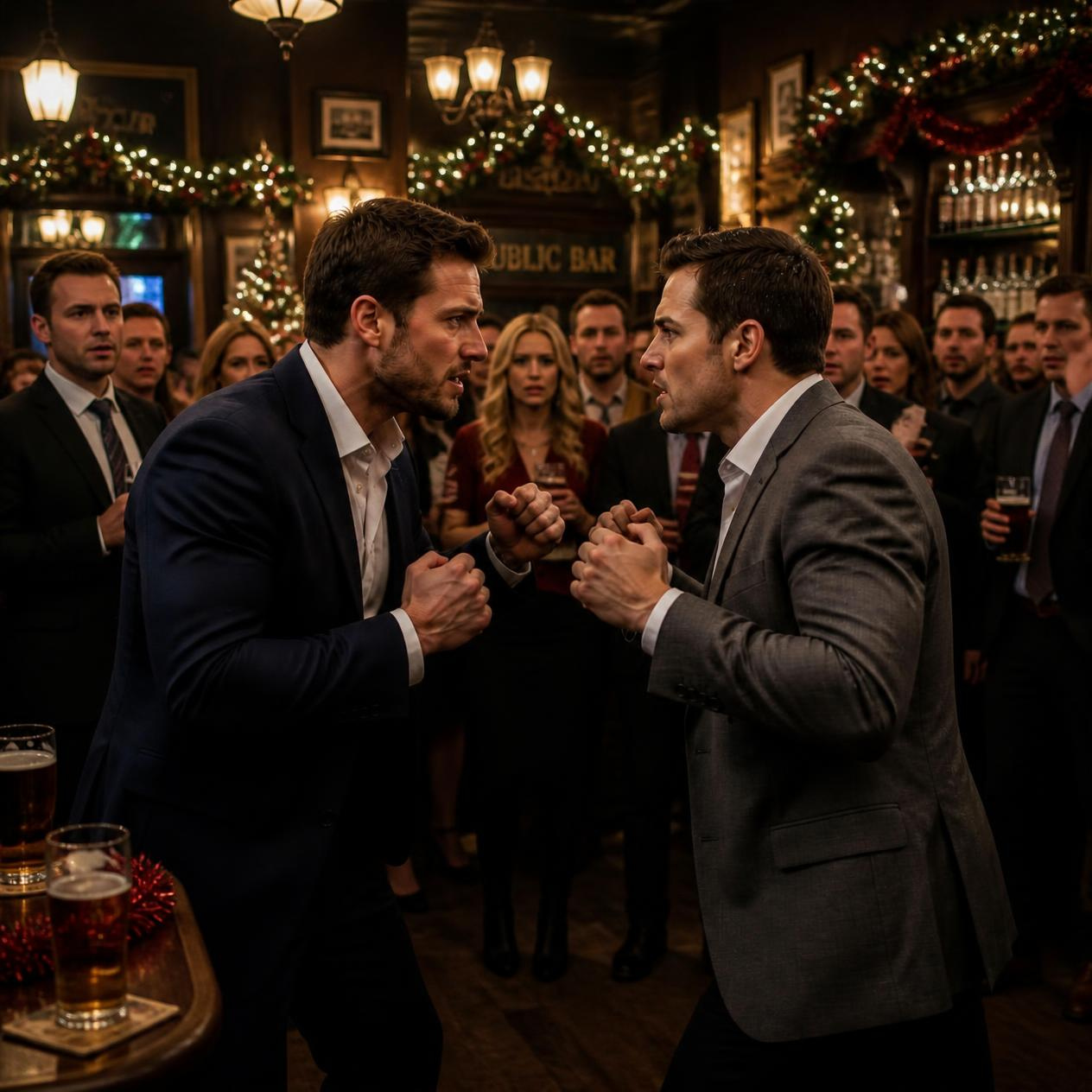
A maintenance officer at a large public sector arts organisation attended the employer's Christmas party. After the party formally ended, a group of around twenty employees walked to a nearby bar. In the smoking area, the applicant and a senior colleague he had never met before had a conversation that turned sour. The applicant used the expression "that's gay," the colleague, who is a gay man, objected loudly and forcefully, and the applicant walked away. Moments later the applicant struck the colleague to the head with enough force to knock him backwards into a gas heater and onto the ground, then immediately left the venue.
The employer investigated, found serious misconduct, and summarily dismissed him. He applied for an unfair dismissal remedy. The Commission dismissed the application.
1. Out of hours conduct can still be "at work"
The applicant argued there was no connection between his employment and an altercation that happened at a bar after the Christmas party had formally ended. The Commission disagreed.
Applying the long standing test from Rose v Telstra, the Commissioner looked at whether the conduct, viewed objectively, was likely to cause serious damage to the employment relationship, damaged the employer's interests, or was incompatible with the employee's duty. Only one or two of those elements need to be satisfied, not all three.
What tipped the balance:
The bar was 200 metres from the workplace and the group had walked there straight from the employer's event.
Both men were only in each other's company because of the Christmas party.
The applicant was a public sector employee, bound by the Victorian Public Sector Code of Conduct as well as the employer's own policy, and those codes extended his conduct obligations beyond the physical workplace.
The affected employee's fear and distress continued into the workplace in the days after the incident, given the applicant held keys to areas of the building.
The lesson for investigators and employers is that "out of hours" is not a blanket shield. Proximity in time, place and personnel, plus the terms of the employment contract and any applicable code of conduct, can bring conduct back within scope.
2. Lost CCTV footage does not sink an investigation, if the account is corroborated
Footage of the incident was recorded on the venue's system, then reportedly saved to a USB stick against company policy and lost. All the Commission had was a phone description of the footage given by a bar employee to the employer's Head of People Operations, noted down during the call.
The applicant argued this failed to meet the higher standard of proof required for a serious misconduct finding under Briginshaw. On its own, the Commissioner accepted the secondhand account might not have been enough.
What saved the investigation was corroboration. A colleague who witnessed the incident directly gave a consistent account, describing "a classic pub punch." The applicant's own evidence, given under oath, broadly agreed with the CCTV narrative. Multiple independent sources pointing the same way met the Briginshaw standard, even without the primary evidence.
The takeaway for investigators: chase corroboration hard when your best evidence disappears or was never obtained firsthand. A single indirect account is fragile. The same account backed by an eyewitness and the respondent's own admissions is not.
3. Shifting accounts erode credibility, and the earliest version usually wins
The applicant's description of the same event changed markedly over time.
In his investigation interview, days after the incident, he described being "enraged" and having "shoved him hard." By the time his first witness statement was prepared for the hearing, it had become a "clumsy push" with his "index finger," made without intent to strike.
The Commissioner preferred the earliest account, made closest in time to the event and before the applicant had the benefit of hindsight about how the conduct would be characterised. The Commissioner also drew an adverse credibility inference from his failure to mention the "that's gay" exchange during the investigation at all, and from the shifting explanations he offered for that omission under cross examination.
This is a well worn principle but the case is a clean illustration of it in practice: get the account down early, in the person's own words, and treat later softening or reframing with real scrutiny.
4. Differential treatment needs a principled basis, not just seniority
The applicant argued the more senior employee involved, who had been aggressive and used offensive language but made no physical contact, should have faced comparable discipline. The original investigation recommendation was that this employee receive a written warning. That recommendation was authorised by the employer's CEO and Deputy CEO, then overturned by the Director of People and Culture.
The Commissioner found the differential treatment was justified. Verbal aggression and a blow to the head that knocks someone to the ground are not comparable conduct, and a lesser penalty for the verbal conduct would have been appropriate.
This part of the decision is a useful reminder that "comparable treatment" arguments only succeed if the underlying conduct is actually comparable. It is also a reminder that internal governance around sign off on disciplinary outcomes can itself become a live issue in a hearing, so it is worth having a clear and defensible process for who holds final authority over an outcome.
5. Provocation is relevant, but it has to fit the facts
The applicant ran a self defence and provocation argument, relying on Tenix Defence Systems v Fearnley, where mutual physical contact preceded the blows that led to dismissal.
The Commission was not persuaded. The evidence did not establish mutual physical contact or a credible threat before the applicant struck his colleague. Aggressive language and someone walking closely behind you does not, on its own, justify a blow to the head delivered with enough force to knock a person backwards onto the ground.
Provocation and self defence remain live and relevant considerations in assessing proportionality, but they need an evidentiary foundation. A verbal exchange, however heated, is not the same as a physical confrontation, and investigators should be careful not to let the two be conflated when weighing a proportionality argument.
Final thought
This case rewards investigators who build a file that can stand on more than one leg. When primary evidence is missing, corroboration carries the weight. When accounts shift, the earliest version deserves the most attention. And when comparing how different people were treated, the comparison only holds if the conduct is genuinely alike.
This article is a case commentary prepared by Insight Investigations Pty Ltd for general information purposes and does not constitute legal advice.