
FedEx worker reinstated after chemical spill dismissal found harsh
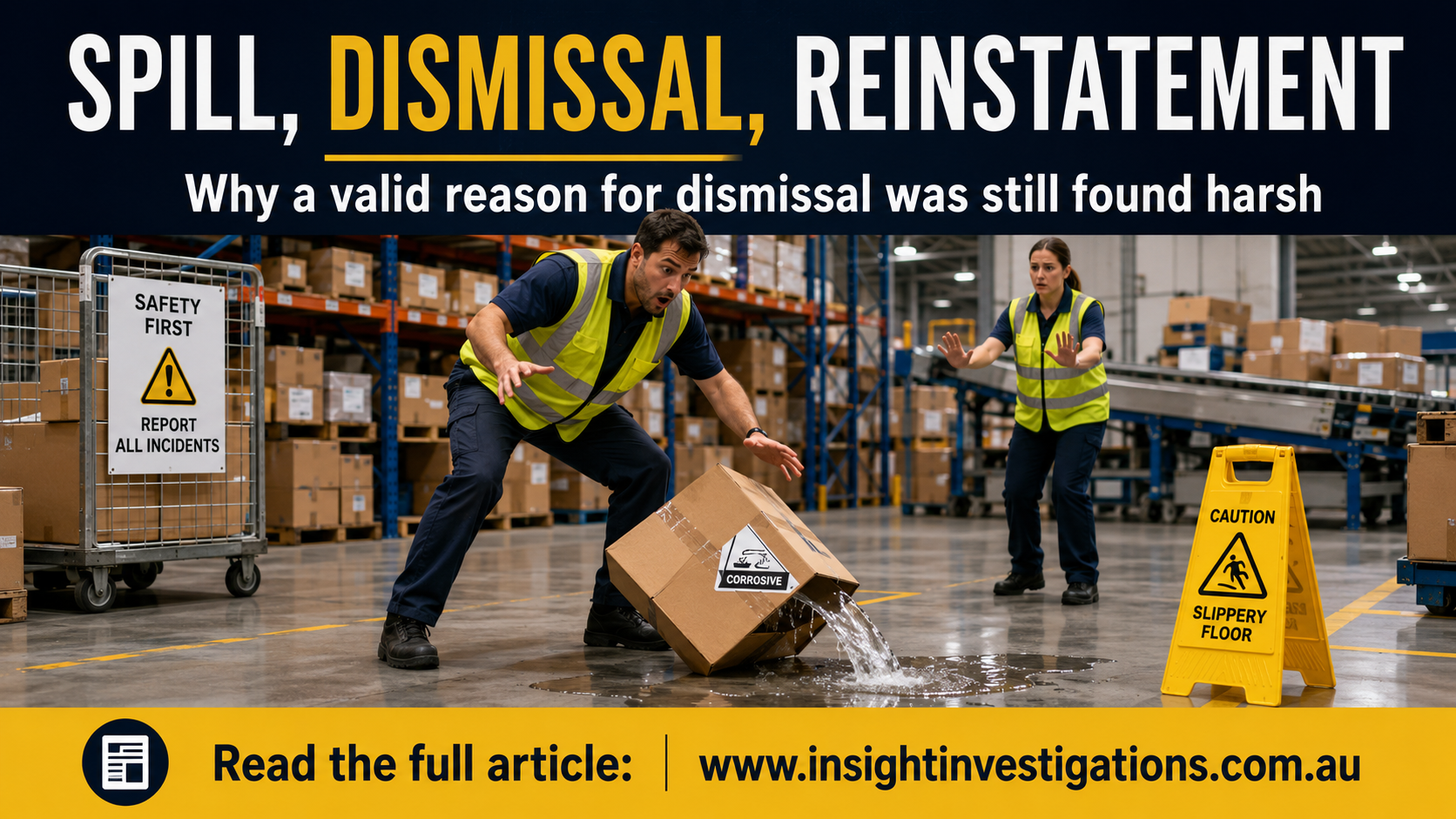
A recent Fair Work Commission decision provides a useful example of how a dismissal can be procedurally fair and supported by a valid reason, yet still be found to be harsh.
In Egan v FedEx Express Australia Pty Ltd [2026] FWC 2600, the Commission considered the dismissal of a leading hand delivery driver following a chemical spill at FedEx’s Unanderra depot.
What happened?
The employee mishandled a package containing sulphuric acid. The acid leaked from the box, and both the employee and a casual labour hire worker suffered burns.
FedEx investigated the incident and summarily dismissed the employee for serious misconduct. FedEx found that he had breached manual handling procedures by dropping the package and then failed to respond to the spill in accordance with its safety procedures.
The employee brought an unfair dismissal application.
The Commission accepted there was a valid reason
The Commission found that the employee had breached FedEx’s safety procedures. He dropped the box rather than carefully placing it down, failed to identify that the package contained dangerous goods, and did not implement the correct dangerous goods spill procedures.
The package was clearly marked as containing dangerous goods and glass. The Commission found that the employee did not check the package closely enough.
As a leading hand, the employee was also expected to set an example for other employees. On that basis, the Commission accepted there was a valid reason for dismissal.
FedEx had also followed a procedurally fair process. The employee was notified of the reasons for possible dismissal, given an opportunity to respond, and had union representatives attend meetings with him.
Why the dismissal was still harsh
Although FedEx had a valid reason, the Commission found that dismissal was disproportionate in all the circumstances.
Several factors were important.
First, the spill was accidental. The employee’s conduct was careless and reckless, but he did not deliberately damage the package or deliberately create the risk.
Secondly, the employee was injured and appeared to be in some degree of shock after the spill. The Commission considered that this reduced the seriousness of his conduct after the leak occurred.
Thirdly, the evidence showed broader safety issues at the depot. Footage showed other workers throwing and kicking packages, placing dangerous goods on a conveyor, and climbing over the conveyor. These were also breaches of FedEx’s procedures.
Fourthly, another employee involved in the response to the spill was treated less severely, even though his conduct was found to be reasonably comparable. That employee had seen the dangerous goods diamond on the box and directed others to clean up the spill without first confirming what the substance was.
Fifthly, FedEx changed its dangerous goods procedures after the incident. Dangerous goods packages were now required to remain in the dangerous goods area until collected by the driver. The Commission found that, had this procedure been in place and strictly followed at the time, the spill would likely have been avoided.
The employee’s personal circumstances were also relevant. He was 57 years old, had been unable to find secure comparable work, had experienced financial pressure, and supported a daughter with a disability.
The outcome
The Commission found that the dismissal was harsh and therefore unfair.
The employee was reinstated to his previous position as Leading Hand Delivery Driver at the Unanderra depot. His continuity of employment and continuous service were also restored.
However, the Commission did not award full back pay. Because the employee had engaged in misconduct and there was a valid reason for dismissal, the Commission ordered FedEx to pay only five weeks’ wages plus the required superannuation.
Lessons for employers
This decision is a reminder that unfair dismissal cases are rarely determined by one issue alone.
A safety breach may provide a valid reason for dismissal. A fair investigation process may also weigh strongly in the employer’s favour. However, the final disciplinary outcome must still be proportionate.
Employers should consider:
• whether the conduct was deliberate or accidental
• whether the employee was affected by injury, shock or other circumstances
• whether other employees contributed to the incident
• whether disciplinary outcomes are consistent
• whether workplace practices show broader non-compliance with policies
• whether the organisation’s own systems contributed to the risk
• whether dismissal is proportionate when compared with other available outcomes.
For workplace investigators and HR professionals, the case also highlights the importance of looking beyond the immediate incident. The broader context, including workplace culture, comparable conduct and post-incident procedural changes, can be central to the outcome.